Applications

MIPI CSI-2
Cameras
Robotics

From AMRs to humanoid robots

MIPI Cameras: The eyes of the robot

Technical progress in robotics and embedded vision is inextricably linked: cameras and real-time image processing form the basis for environmental perception and interpretation. The technology enables autonomous decision-making and learning in the first place. It creates the foundation for self-driving cars and machines, for cobots, and for humanoid robots. Development is advancing at an enormous pace – for the capabilities of the robots as well as for the cameras and embedded vision systems that provide and process the necessary data.

At the same time, these modern robotics applications place the highest demands on the embedded vision components used: spatial perception requires stereo vision; autonomous decisions need real-time computing power. Edge AI or Physical AI enable the execution of multimodal generative artificial intelligence directly on the device. In addition to the corresponding computing power, ultra-compact and energy-efficient cameras and embedded vision systems are in demand, which function reliably even under harsh environmental conditions.

Key Benefits of MIPI Vision in Robotics

High speed and low latency

through fast data transfer via MIPI CSI-2

Autonomy & security

autonomous operation with local data processing

Efficient design & easy integration

with ultra-compact, power-saving cameras and systems

Robust, scalable & cost-efficient

with perfectly adapted, industrial-grade hardware

Applications in robotics

MIPI cameras and MIPI-based vision systems handle key applications in robotics – from use in gripper arms and production lines in the automotive industry to mobile robots for diverse fields of application, as well as cobots, medical robots, and service robots. Here we present some typical embedded vision applications in robotics.

Mobile Robots

Navigation and obstacle detection for AMRs and self-driving machines.

Humanoid Robots

Spatial awareness and the ability to act independently, even in unfamiliar surroundings.

Industrie­roboter

Robots in industry handle complex manufacturing processes or work hand-in-hand with humans.

Medical Robots

Assisting with or performing operations – remotely controlled directly inside the body.

VC Solutions for Embedded Vision in Robotics Systems

From flexibly integratable camera modules and accessories to ready-to-use cameras with optics, to complete vision systems and customer-specific developments: Choose the right components for your robotics application from the VC MIPI® Portfolio.

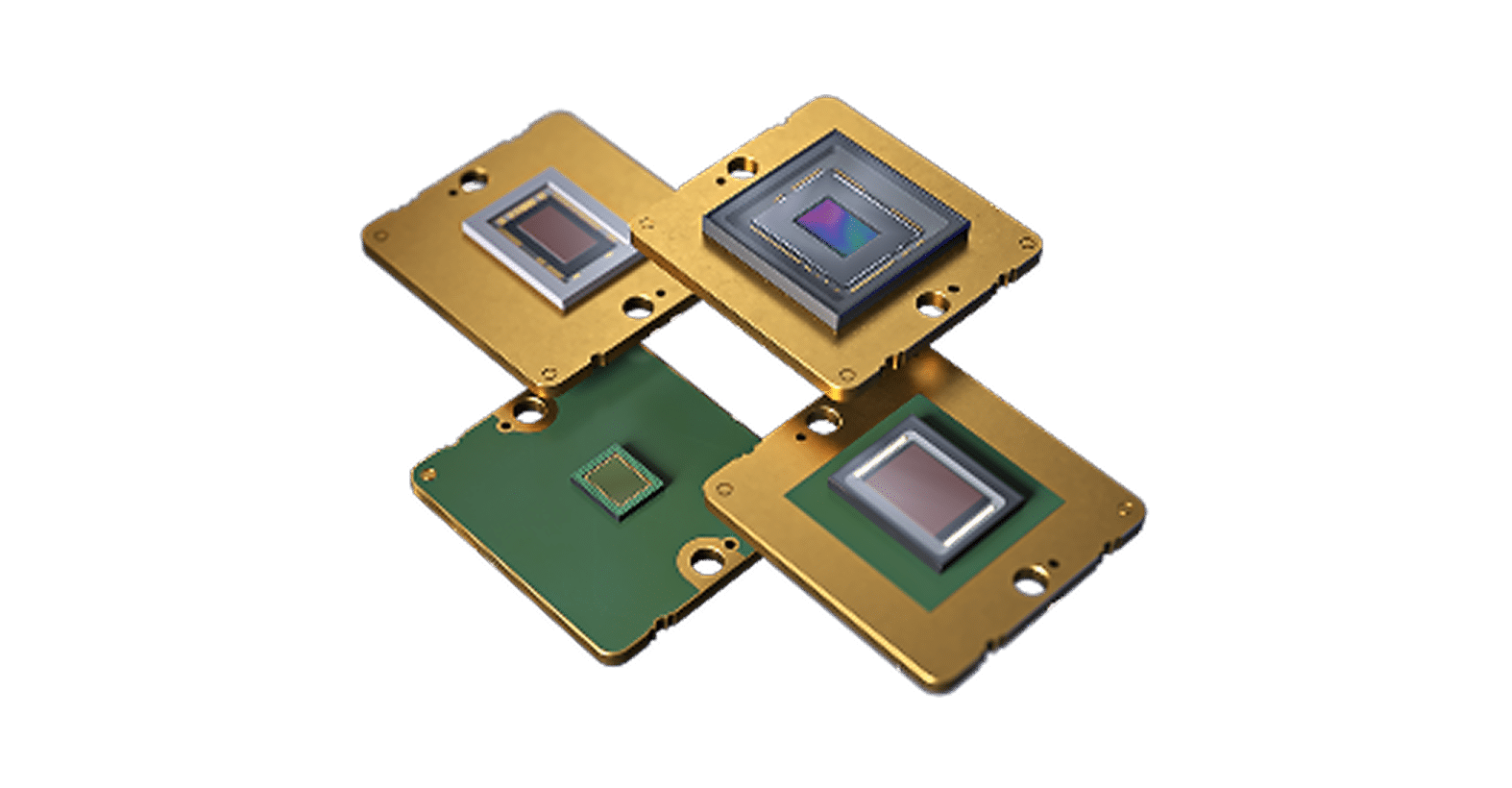
MIPI Camera Modules

Our MIPI camera modules combine maximum flexibility with a wide range of sensors. They can be used with all processors featuring a MIPI CSI-2 interface. We provide the matching drivers and support you in choosing carrier boards and accessories.

VC MIPI Bricks

VC MIPI® Bricks is a modular system of perfectly matching MIPI cameras, accessories and services. This makes your development of an embedded vision system faster, easier and more cost-effective.

MIPI-based Solutions

VC MIPI® Based Solutions are embedded vision systems based on our MIPI CSI-2 technologies that can be integrated directly into your application.

How can we help integrate vision into your robotics project? Let’s talk about your goals and requirements.

  • Selection of the right image sensor
  • Integration: camera module, components, or complete system?
  • Design-in, review, and series qualification

Vision Components: Your partner for MIPI Vision in professional applications

VC is a developer and manufacturer – not a distributor. Customers speak directly with experienced Embedded Vision experts and receive the components for their project from a single source. Individual adaptations and variants are possible at any time, perfectly matched to the respective application.

Case Studies: VC MIPI Cameras and systems at work

Projects featuring VC MIPI® Cameras, components, and systems are successfully deployed across numerous industries and applications – from automation and quality assurance to robotics, smart home appliances, and smart city solutions, as well as in drones, special-purpose vehicles, medical technology, and laboratory equipment. 

Nanosatellites for Earth observation - a view from space

Space operation: VC MIPI for Satellite Images of Earth

Interconnected nano-satellites use VC MIPI® and Raspberry Pi.

Autonomous Mobile Robot (AMR) Arculee for Intralogistics

Flexible Intralogistics: Precise Navigation for arculus AMRs

Positioning mobile robots to the millimeter with NVIDIA Jetson and VC MIPI® Cameras
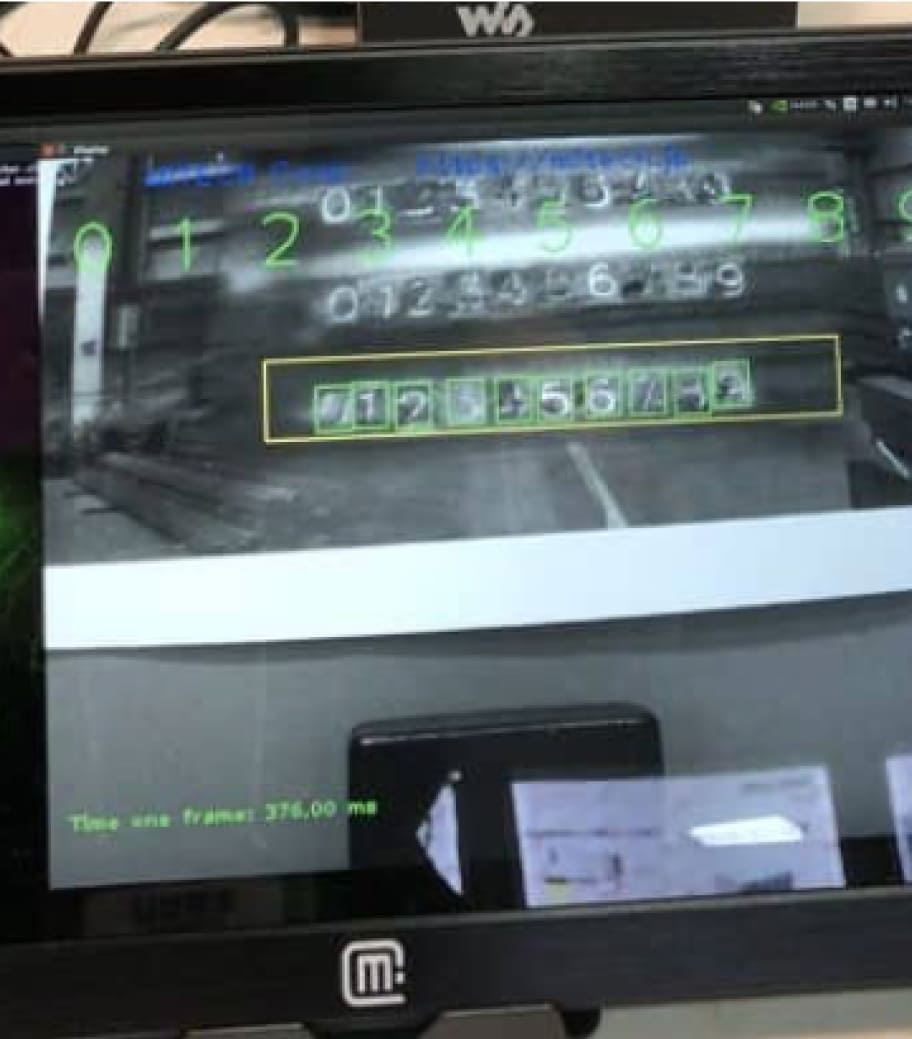
Reading engraved characters

Find and read engraved characters? Deep learning helps!

A system with NVIDIA Jetson processor and VC MIPI® cameras identifies barely legible characters.

More Information on MIPI Vision applications for robotics

Do you have further questions?

For modern robotic systems, embedded vision functions as a central sensor: humanoid robots use camera data to perceive their surroundings three-dimensionally and to act in real time. Autonomous Mobile Robots (AMRs) as well as cleaning and service robots orient themselves with the help of integrated cameras to navigate precisely and bypass obstacles independently. Highly developed robotics platforms can hardly manage without the use of flexible embedded camera systems today.

Extremely compact and modularly adaptable VC MIPI Cameras are ideal for AMRs, as they are available with a wide variety of modern image sensors and meet the vital requirements for quality and long-term availability. A decisive advantage in system integration is the flexibility of MIPI cameras during connection: via versatile cabling options such as FPC, Micro-Coax, and GMSL2, the MIPI CSI-2 camera modules from Vision Components can be effortlessly embedded into the robot's design and connected to popular embedded processor platforms (e.g., from NVIDIA or NXP). First-class driver support is another important criterion for selecting the right cameras.

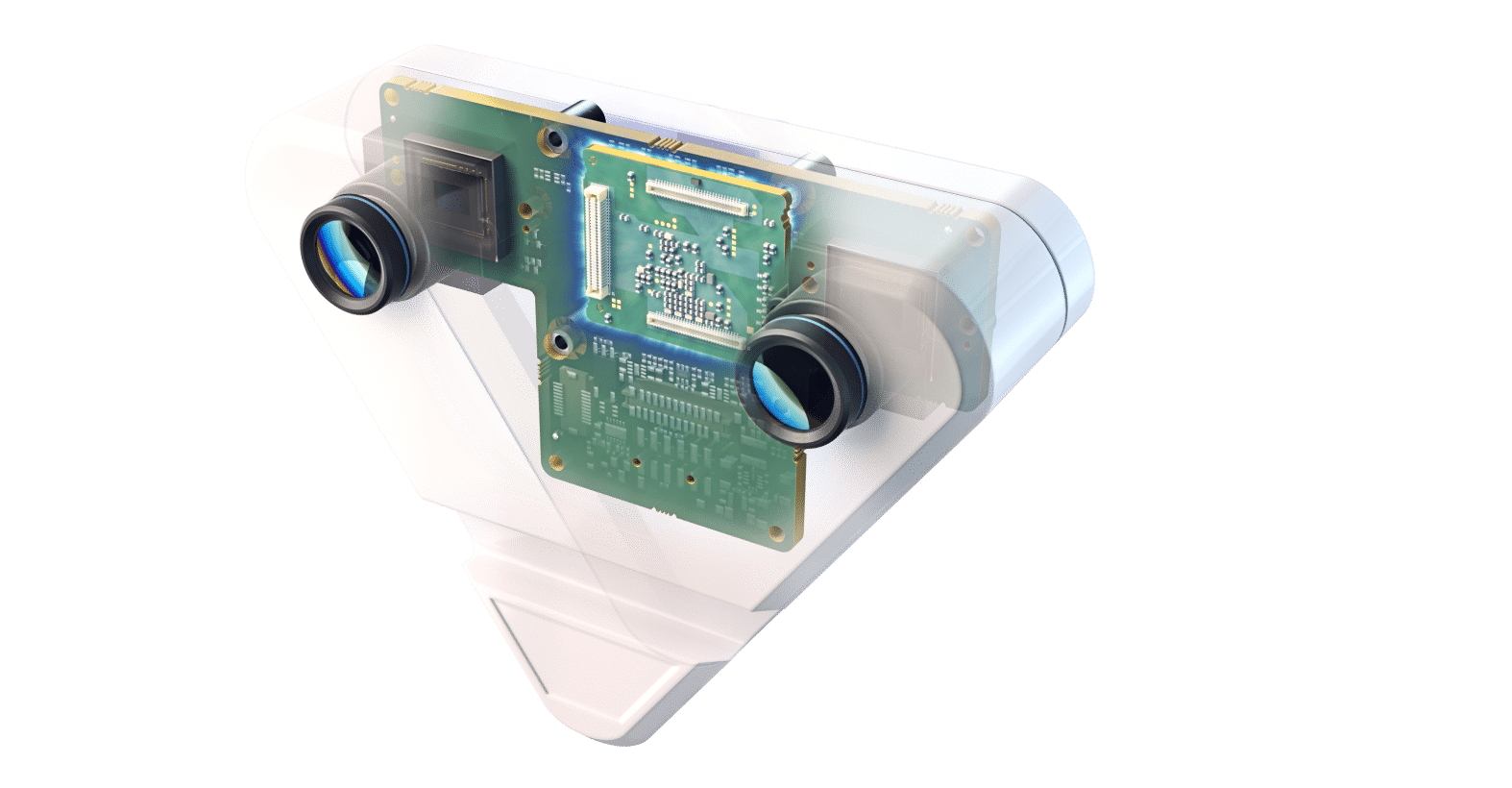
Stereo vision mimics the biological principle of human depth perception. While a single camera only provides flat 2D information, stereoscopy grants robots a true spatial awareness, which is essential for autonomous and safe movements. For this purpose, two image sensors are mounted at a precisely defined horizontal distance from one another—for example, VC MIPI Camera Modules, which are specially available with two camera modules on a single PCB and including optics. Since both sensors capture the same scene from slightly shifted angles, a minimal image shift (disparity) occurs. From this difference, the system calculates the exact distance to all objects in the space in real time.

Edge AI describes a robot's ability to execute complex AI processes such as object recognition or path planning directly on the integrated hardware. No cloud access and no external computing capacity are required for this. Technically, this is implemented using solutions based on VC MIPI Technology that combine cameras with high-performance data processing. For high-performance applications and humanoid platforms, the camera modules are coupled directly with specialized AI accelerator boards (for instance, from NVIDIA). When the system processes the data streams of numerous sensors simultaneously to execute immediate physical actions, this is also referred to as "Physical AI".

Humanoid robots require maximum performance from the vision system combined with a minimal footprint and low power consumption. This is the most efficient way to realize AI-supported real-time analyses during continuous battery operation. Since these are sophisticated volume products, all components must meet the highest quality standards. To avoid costly and time-consuming re-designs during the product lifecycle, developers ideally rely on components developed in Germany and long-term available, such as VC MIPI Cameras and the matching accessories from the VC MIPI Bricks System.

Physical AI connects digital intelligence with the physical world: systems like cobots, humanoid robots, or autonomous vehicles actively perceive their environment and translate this information into precise physical interactions. Multimodal AI models fuse the data streams of a wide variety of sensors for this purpose. VC MIPI Camera Modules and VC MIPI Based Solutions play a key role here: they deliver the necessary data depth and image quality directly at the interface to the environment—be it as "eyes" in the robot's head or as a highly integrated subsystem directly on a robot's gripper arm to solve purely local tasks autonomously.

Strict regulatory and technical requirements apply in the medical sector. Surgical robots require ultra-compact image sensors of the highest quality. Because medical devices go through extremely complex development and certification phases, the verifiably long-term availability of components is a vital criterion to ensure continuous series production without renewed, expensive certifications. VC MIPI Camera Modules are ideal for this, as they are specially developed for use in professional series products and manufactured in Germany according to the highest standards. A broad portfolio of available image sensors ensures optimal alignment with the respective medical field of application.